How to Brief a Software Agency So You Get an Accurate Quote
Most quote surprises aren't the agency's fault, and they aren't the client's fault either. They're a briefing problem.
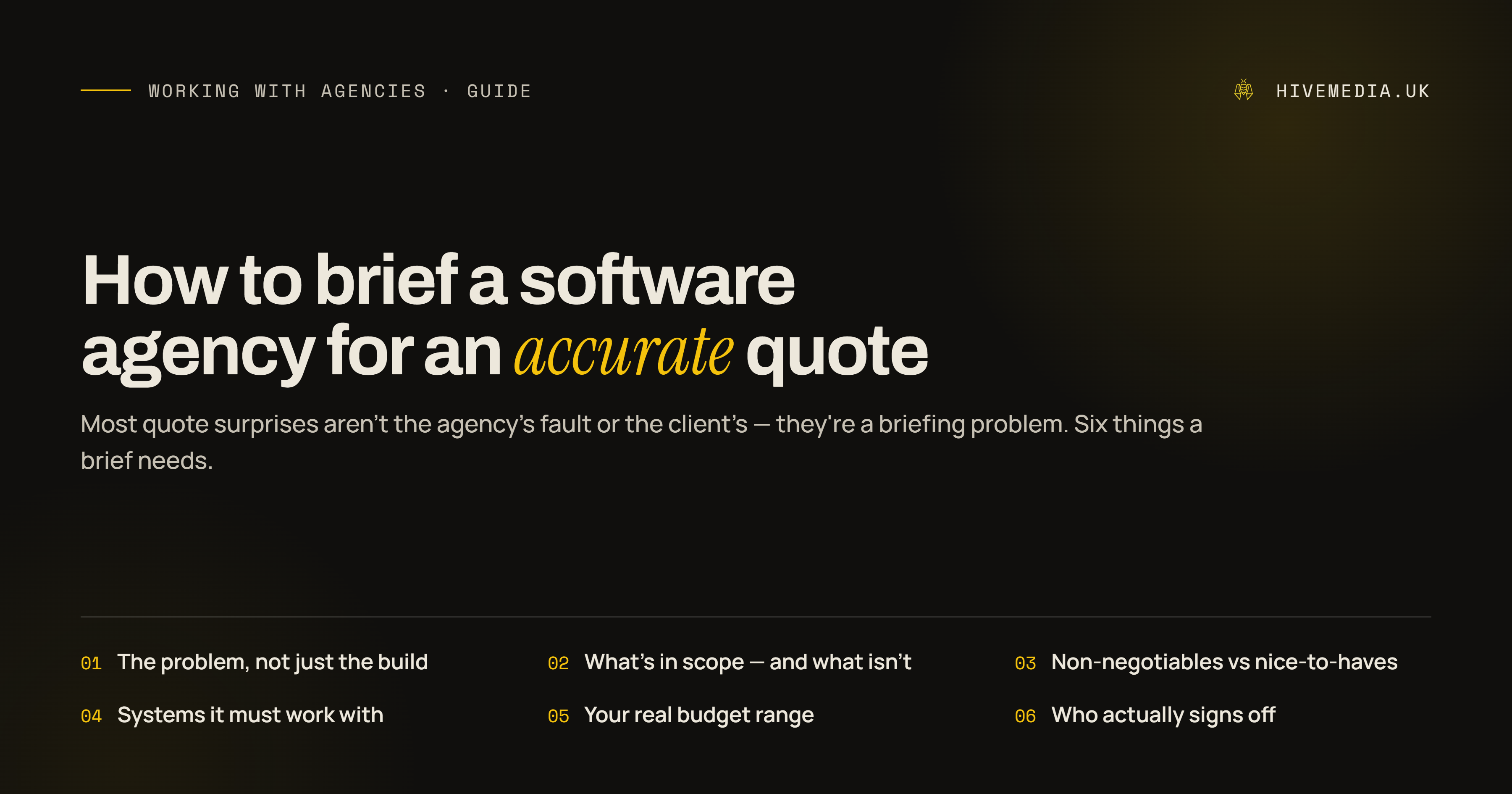
How to Brief a Software Agency So You Get an Accurate Quote
Most quote surprises aren't the agency's fault, and they aren't the client's fault either. They're a briefing problem.
A vague brief gets a vague quote — usually optimistic, usually wrong. Here's what actually needs to be in there if you want a number you can trust.
1. What problem you're solving, not just what you want built
"We need an app" tells an agency almost nothing. "We need a way for customers to book appointments without calling us, because we're losing 20% of enquiries to missed calls" tells them what actually matters — and lets them suggest options you might not have considered.
2. What's in scope, and what's explicitly not
If you know you'll want a mobile app eventually but not in phase one, say so. Agencies quote based on what's asked for. Leaving future phases vague, rather than explicitly out of scope, is one of the most common causes of scope creep down the line.
3. Your non-negotiables vs. your nice-to-haves
Every project has a handful of things that genuinely can't be compromised — a launch date tied to an event, a legal requirement, an integration the business depends on. Separate those clearly from features that would be nice but aren't essential. This changes how an agency prioritises, and often changes the price.
4. Any existing systems it needs to work with
Legacy databases, third-party APIs, existing accounts or platforms — these all affect cost and timeline, sometimes significantly. An agency that finds out about a critical integration halfway through discovery will requote. Better to surface it upfront.
5. Your actual budget range, not a number you think sounds reasonable
Agencies can't reverse-engineer your ambition from silence. If you give a real range, you get a proposal scoped to fit it. If you withhold it "to see what they come back with," you usually just get a quote for the fullest possible interpretation of your brief — then a negotiation from there.
6. Who's making the decisions
If input from three departments is needed before anything is signed off, say so early. Agencies build in review cycles and revision rounds — but only if they know how many people are actually part of the approval process.
The takeaway
An accurate quote isn't about the agency guessing better. It's about giving them enough real information that guessing isn't required.
The best briefs read less like a spec and more like a conversation you'd have with a new hire on day one — here's the problem, here's what matters, here's what's off the table, here's what we're working with.
If you're not sure your brief has what it needs, it's worth a quick call before you send it out to multiple agencies — a clearer brief means the quotes you get back are actually comparable.